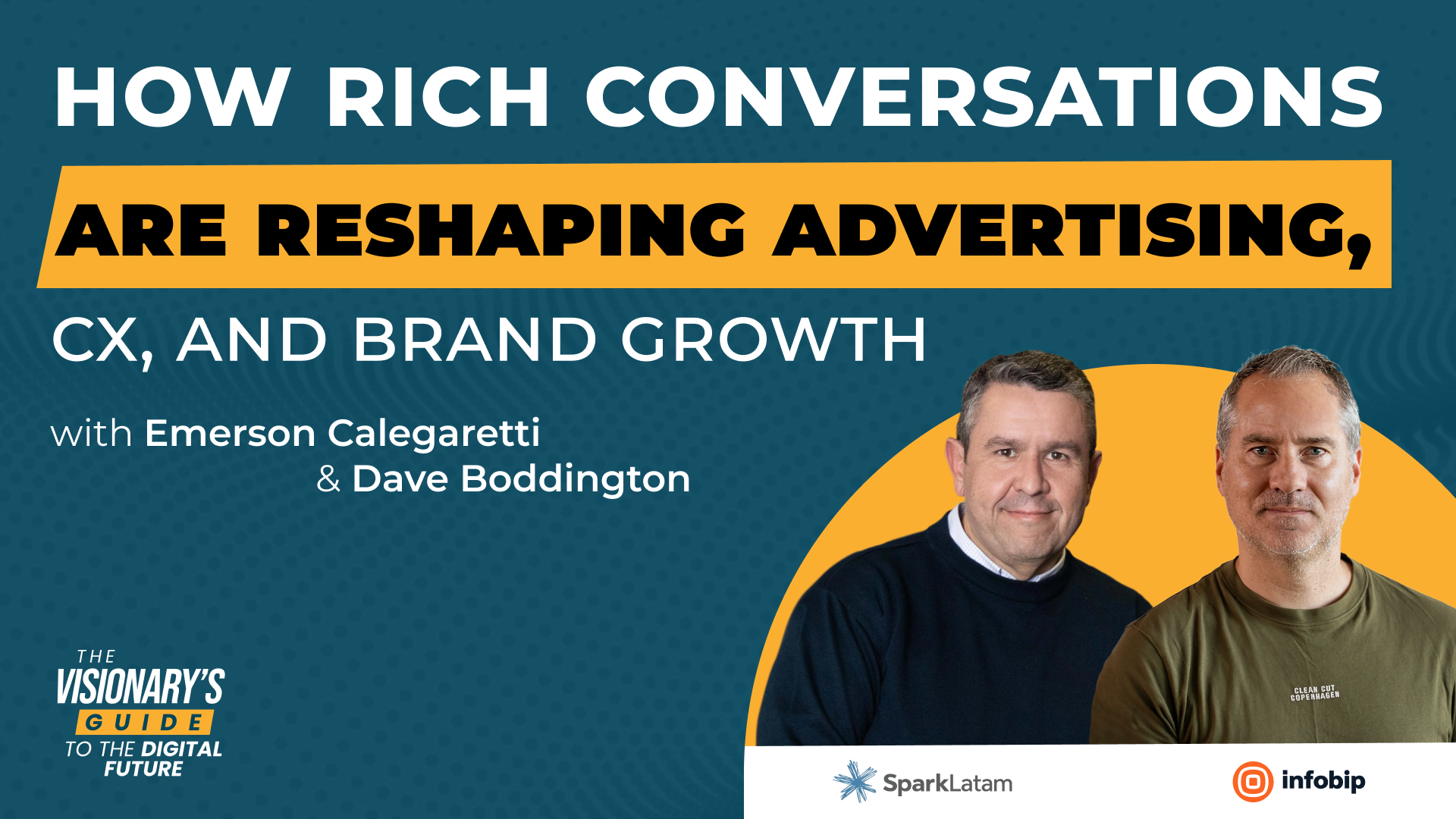

Welcome to The Visionary’s guide to the Digital Future. If the best way to predict the future is to invent it, then let’s get you ready to do just that. This podcast is created for the visionaries of today who are charged with creating the customer experiences of tomorrow. I’m your host, Paul Lima, the managing partner at the Lima Consulting Group.
From Wall Street to the Pentagon and Fortune five hundreds alike, I’ve been as part of some of the largest digital transformations ever done. We promise three things here. One, a strategic perspective. Two, content geared for decision makers and actionable insights into the real problems that digital visionaries can apply within minutes.
We’re watching the economics of marketing break in real time.
Customer acquisition costs are rising, and attribution metrics have always plagued marketers, but they’re even more elusive today. And for the first time in decades, brands are starting to question whether buying attention works, Landing pages and website traffic is down. And cost to serve customers are on the rise with global labor markets. At the same time, something very different is emerging: conversations.
Actual two way, real time conversations with customers. And those conversations are starting to outperform traditional media in ways most executives are not prepared for.
And these conversations are happening in the native inbox of the cell phone. So the question becomes, are we witnessing the end of advertising as we know it, or the beginning of something far more powerful? Today’s episode sits right at the intersection of some massive megatrends, and the implications are really causing those of us in industry to reconsider how we attract, retain, and engage with our prospects and our customers. The effectiveness of paid media, rising media costs and the declining return on ad spend.
These are rapid mega trends that are putting pressure on ad agencies and brand marketers alike. And then we layer on top of that GenAI and Agentic AI, and those solutions are all helping us to augment the speed of our content supply chain and autonomous agents that are in some cases producing content and customer experiences with complete autonomy within the guardrails permitted by your organization. As outlined in this episode’s focus, brands are being pushed into a new reality where they can no longer rely on buying attention.
They need to earn their relationships.
And the place where that’s happening the fastest, that’s messaging. Right in the native inbox of the cell phone. Channels like RCS, WhatsApp and conversational platforms are evolving from simple communication tools into full customer experience platforms. Those are orchestrating customer experiences. Let me start by introducing someone who’s had a front row seat to the evolution of modern advertising.
He’s the CEO at Spark LATAM, a consulting firm that helps businesses from abroad and locally to interact. They focus on helping organizations conduct cross border growth and market entry.
Emerson Calegaretti was Google’s first employee in Latin America, an early employee at Myspace, and for ten years he worked in Miami to promote programmatic ad buying solutions in the U. S. Hispanic market. He’s been a part of building some of the most important advertising ecosystems in history from the ground up. But what makes Emerson unique isn’t just that he helped scale Google, it’s that he understands how the entire ecosystem for advertising works between brands, agencies, publishers, and the economic forces that connect them. He’s seen the rise of programmatic, he’s seen the golden age of digital media, and now he’s watching that model contract under pressure.
And that makes him the perfect person to help us answer a very big question. What happens when the advertising model starts to give way? Emerson, welcome to the show.
Emerson Calegaretti
Thank you, Paul. I’m delighted to be here. Thanks for the invite. I strongly recommend that the audience go back to the previous episodes. I’m a great fan. And I hope that, you know, I can be up to the next guest, which is a global leader in the field. Thank you.
Paul Lima
Well, I’m delighted to have you. And joining him is someone building what I would describe as the infrastructure for the next generation of customer engagement. David Boddington, he’s the global group product manager for RCS at Infobip, is one of the most connected communication platforms in the world. We’re talking about a platform that orchestrates hundreds of billions of interactions annually across SMS, WhatsApp, rich communication services, and virtually every other major messaging channel. He’s calling in from London. Dave, welcome to the show.
Dave Boddington
Yeah, Paul, thanks very much for the invite onto the show. Really pleased to be talking to the two of you, sending you a massive group hug over from the UK.
Paul Lima
High fives from over here in Brazil where I’m joining Emerson. So Dave, if you wouldn’t mind, can you just give us a little understanding about Infobip and the billions of interactions that Infobip is behind?
Dave Boddington
Yeah, Paul, thanks very much for the invite onto the show. Really pleased to be talking to the two of you, sending you a massive group hug over from the UK.
Paul Lima
High fives from over here in Brazil where I’m joining Emerson. So Dave, if you wouldn’t mind, can you just give us a little understanding about Infobip and the billions of interactions that Infobip is behind?
Dave Boddington
Absolutely. So Infobip is a leader in the CPaaS space, actually celebrating our 20th birthday this year.
And we’ve evolved through a number of kind of iterations and generations of the CPaaS space really, you know, in a humble very humble beginnings in a in a village on the on the the the north coast of Croatia in Istria as an SMS aggregator through growth of additional channels, growing SMS globally into over eight hundred direct operator connections. We’re now in a position a position where we support multiple channels, both telco as well as OTT channels, RCS for business, which obviously I work on specifically, but WhatsApp, Apple messages for business, Vibe, Align, etcetera, into email, voice, and so on, as well as an expanding SaaS stack as well.
We actually recently released this week our annual messaging trends report.
And to to mark our our 20th birthday, we we’ve announced we’ve sent over 3.8 trillion messages in that time, which is quite a significant achievement, I think, for for what was founded by a couple of guys in a village on the coast of Croatia. It’s a fantastic achievement.
Paul Lima
And that 3.8 trillion, is that historical or was that just last year?
Over what period of
Dave Boddington
time?
No, that’s historical. Yeah, that’s historical.
We will be doing something to be doing that in one year. But actually last year we had 628 billion mobile channel interactions in the year.
Paul Lima
Wow.
Yeah, and we’ll get into a little bit more about how that’s possible and the backbone of what Infobip is doing with your 800 connections to different Telcos across the globe because it’s why I wanted you to get in front of these visionaries who are really charged to create the digital future and talk about what’s happening with Infobip. I think we in the United States have a lot to learn from some of the experiences that you and Emerson are going to talk about.
So let’s start with our first area here where I wanted to dive into which is the evolution of advertising from the inside. Joining us we’ve got Emerson. Emerson you literally were the first employee at Google in Latin America along I think you told me the same day there was one gentleman hired in Mexico along with you. And there you were, you needed to create what in essence is an advertising platform and push the capabilities of what Google could provide in Latin America.
So I’d like to hear a little bit about just the model of what that was like. And then really where I wanted to take this is as we go into the present day and we talk about this inflection point of media, programmatic ad buying and the pressures and megatrends that are causing difficulty for anybody buying media. There are so many downward pressures, the cost per click is going up, our results are more challenged than ever before. So what was it like starting Google and what are some of the implications now that you’ve been through this journey that how is the world changing?
Emerson Calegaretti
It keeps changing, Paul. I think that advertising as other industries as well, we go through waves, right? We have trains that fade and it’s a let’s say, it’s a constant challenge. So when we started Google in Brazil, the challenge was to move advertisers to move brands from display media where they had their image, their logos, etcetera, to something text based. So that in itself was a challenge to convince marketers that you’re going to let go of your image and start using text.
And, you know, throughout the the past sixty years, let’s say, the advertising industry have have been constantly going through those waves. I think that right now, the current state, it’s it’s a very interesting state because the arrival of AI has changed everything in our industry, in other industries, and in particular, in advertising, in communications, we are seeing a lot of change that are both internal and external.
For brands, as we mentioned before, the cost of click is going through the roof. Actually, the cost of media in general is going through the roof. Also, have diminishing returns, you have less efficiency. So for the brands, where they used to execute is providing less results. Conversely, for the agencies, the pressure is way higher.
They are pushed by the brands to produce better ideas to come up with alternatives to these problems, but also they have some internal problems. They have a lack of talents.
They are being pushed to deliver more results with less money. And they still are playing with different playbooks that used to be great in the past five years that perhaps are not great right now.
Paul Lima
Yeah, what’s interesting is I listened to your background and I think it’s important for our audience to understand, you started in Sao Paulo with Google and later went to Myspace. But you also know the American market. So tell us about your experience in working in Miami, if I’m not mistaken, for about a decade.
Emerson Calegaretti
At the end of the 90s, I was with UOL, as we say in Portuguese, U-O, right? It’s one of the major portals and ISPs in Brazil. And we were some of the pioneers in bringing portal content to the web. Actually, we were modeled after AOL so hence the similar name. So back in nine seven, we we started in US. We started producing content in English, Spanish, and our goal was to expand into Latin America.
And why Miami? It’s because it was a hub. From there, we were able to reach out to advertisers in Oregon or San Francisco and normally because they had global plans. And what we brought to the table was a single point of entry to reach Latin American audience.
So it was a great experience, especially because there are different business practices in every region. Right? I think that Dave has a great experience in Europe. We have been working in Latin America and North America for quite some time.
And it’s interesting to see the differences, how they approach problems, how they try to fix these these situations. So I’ve spent almost ten years there, and I’m sorry for the English listening audience. My English is not perfect yet, but it was great to learn how they are using advertising to expand. Right?
A few folks think about how powerful is advertising to expand business beyond borders.
Paul Lima
Yeah, I’ve heard that accent is a badge of courage. And for you to get on an airplane with your family to Miami and live there for a decade is courageous. But the other thing that’s really interesting is if the United States were a Spanish speaking market, it would be the sixth largest country in terms of GDP in the world. So a lot of what you were doing, if I’m not mistaken, was in Spanish language media, Hispanic media, right?
So I think what I wanted the audience to understand about Emerson’s background is that you really have the voice of authority from literally working as an early entry employee at Google and understanding both Latin America and the United States markets.
So let’s switch over and go to Dave. Dave, one of the things that I’ve noticed about Infobip is it started out as kind of a, and maybe I’m mischaracterizing it, we’ve been partners for a number of years, but my perception is a lot of infrastructure for telecommunications. And over time, I think the maturation of the company is much more akin to a customer experience orchestration platform.
And so maybe you could just talk a little bit about that transformation because the question I really wanna dive into is why are conversational channels becoming so important? And why are so many organizations from companies like Adobe and Tealium and Salesforce and Braze moving from wherever they came from, the Creative Cloud or CRM, and becoming Customer Orchestration Platforms, which you are too.
Dave Boddington
No, absolutely. And I think as a business, Infobip has a number of different strands to it. So, yeah, as touched on a little bit earlier in terms of our history through the evolutions of of CPaaS from pure aggregation into richer channels, into more conversational experiences is one direction of growth for us as a business. We’ve always been extremely close to and extremely proud of our the strength of our relationships with carriers globally.
And that’s actually a a significant element of our business, our Telco specific products, whether it be firewalls, number verification solutions, etcetera.
But you’re absolutely right. As you say, the the market from, you know, our, you know, our humble beginnings in, you know, twenty years ago is very, very much different from where it is now.
It’s very much different not just from the
Telco perspective. It’s very different from the business perspective. It’s also hugely different from a a consumer perspective. And so I think you’re absolutely right. The the traditional categories that businesses fell into, data, CRM platform, aggregator, there’s a there’s a significant kind of blurring around the edges because ultimately, everyone’s looking to understand where they can add value to that value chain, but of course, also derive value from that that value chain. And and where that value can be achieved is evolving.
And it’s it feels at the moment, it’s evolving and changing year on year, think it’s probably fair to say. We’re in such a fluid and dynamic ecosystem right now. It’s yeah. What we’re gonna be talking about now, I’ve got absolutely no doubt much of it’s gonna be superseded if we were to have this conversation again in a year’s time.
You touched on the kind of the conversational piece, and I think that’s that’s a really interesting element to to pick up on because I remember producing slide decks 15 years ago that reference conversational commerce.
And I think for all of the the the rhetoric and the the interesting PowerPoint headlines, We’d probably hard be pushed to say when has conversational commerce, truly conversational commerce, really been something that has been a reality. There’s been iterative messaging commerce, if you want it like that. But I think if you look at truly conversational commerce, that’s a whole new paradigm.
If you if I was to have a a conversation, where do I have that? I have that in person.
I we we talk in sentences in prose, in paragraphs. We don’t talk in talk in one word, two word messages that will be passed back and forth. And I think where the the ecosystem, the environment, the technical environment we’re in, the commercial, the consumer environment we’re in right now, and start this is really starting to open up for us with the the power of messaging channels, the opportunity that AI brings, of course, and the position in certain businesses, that’s really where truly conversational actually becomes a potential reality. In some cases, a true reality, an actual reality rather than something that just appears on, shall we say, on PowerPoints and PR releases.
Paul Lima
Well, that’s an interesting perspective. Right? And I’m with you. I remember there was conversational commerce and I heard that and I just thought, again, probably same period of time, 12 to 15 years ago, what a gimmick, And I don’t know if it’s a gimmick anymore and we’re going to get into some use cases because when you get into some of these chatbots and what they’re able to do in this migration from assisted to automated to augmented to autonomous, right? With those 4 As and that maturity curve within the guidelines of what they’re able to do, it’s astonishing, right? And I think the promise and why so many boards are excited about the capabilities of these solutions is that they really can provide value now. I think that’s what I hear from you, Dave, talking about really finding locations in terms of customer experiences and what can this technology do well today.
But let’s go back because I think what’s kind of curious maybe for our audience is why we have someone from Brazil and why we have someone from London talking to us about rich communications.
And maybe a lot of folks in the United States and in my travels I’ve found that very few executives understand and have had exposure to Rich Communication Services and Apple Messaging for Business.
Those are new technologies in the United States. We’re going to talk a little bit about why that is.
But I thought what would be really interesting is to hear that from Dave’s perspective. And why is it that the United States is so far behind in the adoption of RCS in this new generation of rich communications, be it WhatsApp, iber or any of the other solutions?
Dave Boddington
Yeah, think it’s a really interesting kind of question and discussion point actually more than a question as to.
There’s a part of me that actually wants to challenge the premise of the question, which is, is the US far behind in in RCS for business?
At least, is it that far behind? Because, actually, I’m not sure it is on the global scale, but I think it is if you look at against versus certain markets. I also think we will be in a position I think it’s something I’ve talked about for a little while. Well, actually, the US will very much become the the benchmark and set and already is in the process of setting standards that will then kind of be replicated and kind of ripple out the RCS for business ecosystem as it further expands as well.
But I I think it’s a fair point to raise a question. Right? We’re we’re talking now about the US as a market that the three main carriers enabled, yeah, were all aboard with RCS for business only kind of mid last year. RCS as a channel has been around for a long time.
It’s kind of the the newest or the oldest new channel or the newest old channel, whichever way you want to put about it because it’s never really gained that traction. It’s been there. The GSMA defined the initial standards over a decade ago. So realistically, it’s always been a niche kind of channel, a niche piece there up until what was the biggest barrier, which is reach, was removed as Apple came into the ecosystem.
And that really only happened through the back end of 2024 into 2025. And that was hugely significant for the channel, particularly in those markets such as the US that has such heavy iOS adoption. Before then, absolutely there and there there remain a number of I kind of go away from using the words mature because I think as a channel, there’s still a lot of maturing to do. I think really I look at what would be considered maybe established markets for RCS for business.
Yeah. India, Brazil, Mexico, UK, France, Germany, Spain are really kind of established markets for the channel. And each has their their different idiosyncrasies.
And I think you could look at different reasons why the channel has gained great adoption. If you look at Latam and India, for example, really strong mobile use amongst consumers. Right? Many, I say consumers, people, the population.
Right? They, you know, in many cases, with maybe lack or not so well serviced fixed line and potential challenges with power certainly in more rural areas of those regions. Actually, computers weren’t such a thing. Right?
So people lived on their mobiles. And so that behavior of talking to your bank, dealing with your business, or even running your own business from your mobile was kind of habitually adopted. So it became a, you know, a cultural norm amongst amongst amongst people and businesses. That’s not the case if you look at kind of Western Europe, North American where where, you know, power, fixed line was much more stable, much more reliable, businesses were computer run.
So phones became something that were personal or remain personal rather than that blending into personal and business. And that’s where we see some interesting differences between adoption of then of of digital channels. If you look at maybe the the proliferation of WhatsApp, which is kind of, you know, historically been a number of steps ahead of where RCS for business is. If you look at the WhatsApp business messaging, really significant foothold in Latam, APAC regions, etcetera.
And if you look at other digital channels, whether it be LINE, Kakao, WeChat, for example, again, in kind of across the APAC region where users are their phone is their digital device. It’s the gateway into the digital world, whereas in the in Western Europe, Central Europe to a certain extent, and North America, computer was work, phone was personal. So actually, WhatsApp, for example, is a personal communication medium. It’s not a business communication medium.
That’s what email has historically always been for.
So if you you kind of look at it through that kind of lens, North America then, if you also then look at the consideration around WhatsApp has never gained any traction. Right? You know, individuals peer to peer, the messaging that people use between themselves and their friends has always been SMS, MMS. OTTs, non Telco channels have never really gained significant traction, certainly not across the whole of the the market.
And the Telcos have a hugely strong presence in the market and an awful lot
Emerson Calegaretti
of
Dave Boddington
control and governance across the messaging.
And, of course, it’s very tightly regulated market.
And so a lot of those factors kind of a challenge for new entrants into the business or into the ecosystem, I should say. And I also think there is there’s, I’m sure, a little bit of an element of of of carriers in the ecosystem saying, hey.
Let’s get let’s let this the the the channel become more established kind of as I touched on the other markets that are far more established.
And then we can start to see what that means for us because it it is and it will be actually quite a a kind of a a seismic change for Telcos. Okay. It’s a very new it brings very new use cases, business models into their ecosystem.
But what we’re seeing now is as the US carriers have come on board, you know, there’s a there’s a beyond those those first the main three, there’s a we have the second tier, third tier carriers coming on board, the lower tier carriers all being exposed through and enabling onto the channel.
Kind of the principles that exist within Telco messaging, the compliance, the governance that sits around it, the verification that sits around it. Actually, those existed in SMS in the US. They didn’t really exist, at least not to the same extent, in other markets for SMS, MMS. But they’re a core tenet of RCS.
So actually what you look at is as a blueprint, the kind of controls that sit around messaging in the US are now starting to be applied across into other markets. So for example, third party verification, independent third party verification that has been a core standard within US, even from ten DLC and, you know, and that puts into toll free and short codes. That model is being applied for into other markets. UK, France, Germany, for example, have introduced third party verification as we see other markets coming into the channel.
Absolutely, that will be replicated as well. So as I say, what we’re starting to see now is then as those established markets mature and what is a kind of a very mature Telco messaging ecosystem in the US coming into the RCS for business ecosystem, there’s going to be, I guess, reciprocal benefits to each other and reciprocal influences from one to the other. But I think very much so, the kind of standards that the US brings into the channel, we’re absolutely going to see replicated out. And of course, as a huge market with some hugely influential businesses and players, it now opens up some very big doors for businesses into what is going to be a hugely exciting ecosystem.
Paul Lima
I think the question, you know, so what we look at in emerging markets, particularly in the consumer markets, is a scenario where families and individuals are using their cell phone and smartphones as the primary communication device.
And so I wanted you to kind of contrast what you see in terms of widespread adoption on the personal level.
Because I understand what you said is in the business level, America is maybe on par, the United States is on par with the rest of world.
I think, you know, is that true with the personal rest of world?
Dave Boddington
Yeah. I think it’s really again about kind of those cultural habits that have been built up over maybe the last kind of five, ten, fifteen years as I kind of mentioned in markets where and regions where individuals were using the mobile as their primary device for everything, there’s an inherent blurring of the lines. Right? If I’m using my device or the the channels on my device, whether it be WhatsApp or others for both personal and business, that blurring exists.
In other markets where, yes, you know, compute and and I know it’s not necessarily a complete truism, but, yeah, computer is business and and and mobile is is personal. Yes. Of course. Yeah.
We all do our business emails on our phone and check our team’s message and so on. But what’s been kind of established is that chat. And I think, you know, you can maybe look back at twenty one, twenty two COVID and and the like of of where where business communications moved from the traditional email into chat. And that becomes a little bit more interesting.
That may be something to to dive into, you know, a bit further on. But up until that point, there really was that even if I’m using my phone for work, I’m using it for email. So those apps that I’m using for my personal communication, whether it be SMS, whether it be WhatsApp, whether it be LINE, etcetera. They’re my personal apps.
That’s not my work apps. So you kind of have this kind of subconscious separation between what I’m using a certain communication medium for even if the device is slightly blurring. So you look at the the UK is a good example and and much of Western Europe. WhatsApp has got great adoption for peer to peer messaging.
I use it, you know, daily for communication with my family, my friends, my football club group chat, etcetera.
But if a business message is on me and and maybe I’m only a sample of one, if a business messages me on it, I actually don’t want them there. That’s not their space. That’s my space. That’s my personal space.
So I think that’s really where there’s an interesting dynamic in certain markets and whether there’s an interesting difference between maybe what you see in markets such as Latam and across Asia is that those lines haven’t been blurred so strongly. They might be blurred at a device level, but not so much at an application level, if that makes sense.
Paul Lima
Well, that brings us to the dynamic nature of marketing and customer experience where these lines are getting blurred. So let’s go back to Emerson. So if we connect the dots between providing customer experiences to acquire, convert, retain, if you think about the customer experience funnel from beginning to end, and the challenges that brands are experiencing in terms of acquiring and then serving those organizations with the cost of a call center, the cost per click to acquire.
How do you expect or what are you seeing in terms of the adoption of any of the rich communication solutions that we’ve talked about? Be it WhatsApp, be it Apple Messaging for Business, right? And how do characterize what’s happening in the market at the current time?
Emerson Calegaretti
It’s a seismic shift, as Dave said, very well.
And also, just getting to the point of the blurred lines, I think that the main difference first, RCS is the best kept secret for the U. S. Marketers. We, in emerging markets, have been trying to use something like that for quite some time because we are societies that we are not mobile first.
US society is mobile first. We are mobile only. Right? If you take India, Brazil, all the large countries that we operate, we are mobile first.
So for us, mobile always has been something more of a personal device, unlike a channel to interact with anyone, government, banking and so on. So the blurred lines happen because for us, it’s mobile first. It’s not mobile first, it’s mobile only.
And coming back to the fact that it’s a best kept secret, it’s because advertising at the very beginning was thought about a broadcast tool, right? If we go back in time to the time of Mad Men in Madison Avenue, they started to realize that the secret for advertising is to be where the audience is, right? So let’s advertise on TV because we’re going to mass market a certain product. Let’s start some different techniques, radio, cinema and so on. Of course, and you are an expert on that, with the advent of customer journey and the orchestration of these communications, things have evolved. But we always, in in the back of our mind, it’s all about broadcasting.
And what happened during COVID, and Dave was brilliant in sharing that, is that things we were forced to find alternative ways to interact with businesses, with our families, with, you know, loved ones. And that was the spark to really start a very different train where the usage of messaging has become something more of a just a personal interaction. So what what RCS and WhatsApp and all, you know, Apple Business Messaging brought to the table is that not only I can orchestrate better this communication, but it could be transformed from a broadcast to a conversation. That’s the seismic shift.
When we think about advertising right now and marketing, it’s not sending anymore a one way message. Now with those tools, with those new technologies, I can start a conversation.
And that applies to many, many different aspects of our lives. Just the other day, as I told you offline, we moved into a new house in Brazil. And we are going through the problems with power lines and cell phone operators and so on. So I had to ask someone to come and fix the fiber optics of my street. And it was amazing because it was the first time that I had to interact with this mobile company, this huge mobile company through a WhatsApp channel. It it was amazing because it let me go through all the descriptions of what was going on, what was the problem, and didn’t end it in an open ended process. It went right to the scheduling a visit to fix the problem on my street.
So when they started designing this this channel, perhaps they thought most of us Brazilians, we are using our cell phones to interact, and perhaps we could invest in a better communication channel and test the rise of conversation. So the one million dollars question for marketers right now is, what can I do to improve my conversation with those end customers? RCS is the answer.
Paul Lima
Wow. So you just gave us some amazing sound bites.
And I love that concept that in emerging markets, it’s not that mobile is mobile first, it’s mobile only. And I think that’s a really succinct way to talk about the leapfrog that I witnessed, we’ve witnessed in the adoption of all of these solutions, whether you’re talking about EMEA, whether you’re talking about Asia, whether you’re talking about Latin America, you’re looking at all these solutions that I don’t even know the names of all of them, right? Between WhatsApp and Viber and Dave can tell me the restYes, of these.
And does it work?
Emerson Calegaretti
Yes. And actually, Paul, that’s the one million dollars question and Dave perhaps can answer better than I. But it’s important to note the behavior of the client, the consumer.
Coming here, I took the subway and I was surprised to see as Dave also mentioned that the blurred lines of cell phone usage has been a reality for quite some time.
Going back in time, when when I’ve joined Google, there was a project called OLTP, one laptop per child. The dream, it was a moonshot project. The dream was to provide a one hundred dollar computer to every child across the world. If you think about the cell phone, the smartphone has become that dream, that device. And I was riding the subway to the studio here. I was surprised to see young people like using their cell phones to go through lessons, whereas there was another lady scheduling what was probably some appointment.
And it’s crazy to think that these devices in our pockets and not often used by bra to their advantage.
And perhaps Dave knows better what’s the answer to that. Right?
Dave Boddington
No. No. You’re absolutely right. You’ve kind of picked up on some really interesting kind of points to pick up on there at Emerson. Think the one that was really interesting to me, and I hope this is true.
I I saw it referenced somewhere. There was a kind of talk about how the the computing power and and, of course, whenever we talk about computing power, one of the obvious ones to go back to is this is in comparison to the the the moon landing, the computing power in the moon landing shuttle.
And someone made a reference to the kind of the multiplier that a current smartphone had compared to that. And one of the responses was the charger of your smartphone has more computing power than the rocket that took us to the moon. Now whether that’s true or not, I don’t know. But I find it the fact that I’m questioning whether it’s true or not maybe says more than whether it is true or not at all because I think that shows where we are right now. And you’re right. I think blast mass media messaging, you know, A to B, sending everyone a message. And, yes, I’m gonna call it personal or personalized because I’m gonna put your name in it rather than just dear, sir.
That’s that really is where kind of mobile marketing messaging as a marketing medium has been for, well, 20 years.
And, yeah, what you pick up on that the last point you referenced here in terms of that consumer change.
Absolutely. You know, that being mobile only versus mobile first, well, actually, if you look at what was maybe, you know, historically a non mobile first and is now a mobile first market, so, you know, pretty much everywhere is now.
Individuals within those market, the younger generations, they are becoming mobile only. So, actually, the differences between, you know, a 15, 16, 17 year old in the US, versus Germany, versus India versus Peru, actually, there’s not a lot now in terms of what technology they have in their hand that they’re using to I was gonna say communicate, but it’s not just communicate, right? It’s run their lives.
Paul Lima
Well, you’re bringing up a point about segmentation, right? So is RCS equally interesting across segments? Geographic, psychographic, firmographic, demographic, psychographic?
And so if we look at, for example, the generational adaptation or any of those other graphics or behavioral, I didn’t mention that one, you need data.
You need data in order to be able to do segmentation and that will then power any personalization or even hyper personalization that you want.
So if we have anyone in the audience that’s thinking, well we don’t have a customer data platform or our first party data may not be as ready or mature for this, we’re just going to put RCS on the shelf for a while and we’ll come back to it after we do some more data integrity work, data readiness posture is improved. What would you say?
Emerson Calegaretti
Would recommend that they do invest right now in some Customer Data Platform. Data is really important, but that doesn’t prevent you to get started. I don’t know if Dave agrees.
Dave Boddington
Yeah. Absolutely. I think knowing your consumer, knowing who you want to talk to, and knowing about them, their behaviors, their habits, their attributes is always going to be hugely important. And this isn’t an RCS specific answer, frankly.
You know, this is a this is a customer interaction answer. You know, that will always be preferred having it is will always be preferred than not having it. But that said, RCS is and I kind of refer to how often it’s kind of everyone looks you you often look for a sound bite as to what is RCS, how to describe RCS for business. And it’s been, yeah, historically referred to as, you know, it’s it’s the evolution of SMS.
It’s SMS 2.0. And I think that really underplays it, frankly. Yeah. And I think it almost puts it in a box that is the box that SMS is in, but maybe a little bit prettier.
But it’s not. You know, RCS is ultimately if we were to reimagine or reincarnate a mobile messaging channel and it to be created for today’s paradigm, for today’s ecosystem, for today’s consumers, you would create something that looks an awful lot like RCS.
So is there a reason to hold back if you don’t have that single customer view, that CDP? Well, absolutely not. Because if you want to engage with your consumers, as Emerson said, right, consumers are pretty much to a to a tee now mobile only. And if not, they absolutely are mobile first. So if you want to engage with your consumers, engage with them on the device they’re using, engage with them in the right way with a richer channel that allows you to engage with them more than just sending them a message, sending them words. You absolutely actually engage with them rather than send them a message.
Paul Lima
I love that. Right? And the concept of being able to create hyper personalization within the cell phone, it just feels like the right channel.
To Emerson’s point, we need to meet the customer where they’re at.
And in the case with what data you do have, in so many ways you can personalize with the data that you’ve got. And that means that you kind of sit back and look at the different use cases where you can use these solutions. What does the AI, what does the platforms, these customer orchestration platforms that are in existing MarTech stacks inside the company, where will it work?
Right, and I think for us the way we normally recommend that organizations address that question is to do some thinking, Design Thinking in a workshop, look at the business use cases and look at a decision criteria to match up the pains of the business. Where do we need to improve margin, improve NPS, improve quality, improve speed, gain operational efficiency to do things faster, cheaper, smarter, better and match that with what does this technology do well.
And when I put those two things together I have a portfolio of solutions that we can then go back and look at bringing in these Custom Orchestration Platforms like Infobip and like your marketing automation solutions, many of which already integrate with WhatsApp and RCS and coming soon Apple Messaging for Business.
So let’s go on to the next question here.
And this one is really I think I need both of your help on this. So we’ll see where we start. But if we were to think about where RCS and I’m just gonna say rich communications, because I don’t wanna limit us only to the RCS standard as produced predominantly by Google, but now adopted by all the platforms. But when we look at middle of funnel and bottom of funnel, right? And I want to focus on that area there. What are some of the use cases that can really deliver value? And before I open that up for the floor, let me explain why I’m not asking this around top of funnel.
And the issue there is that raise your hand if you’re not here.
If you don’t have the permission to send the initial RCS message to acquire a prospect, You may have a number, you may not have a number. You may have a number but if in the case where you don’t have a number, don’t have permission. So top of funnel, there are some challenges and we need to think through those. We can certainly do a form abandonment, right?
Where you gave me your number and you clicked the button that said I can prospect to you. Or maybe you’ve already filled out your SMS, something else where we know that your SMS messaging is permissible with the double opt in, then we can send the RCS for top of funnel. But barring that, so let’s put top of funnel off to the side. Middle funnel, bottom of funnel, what are some of the ways that you’re seeing that organizations can get the most value out of rich communications?
Dave Boddington
So I think the beauty of rich communications and particularly when you pair that with AI.
And I I tend to try and simplify things down as much as possible when I when I I talk about them, if only because it’s how I can understand it, is, you know, rich communication gives a voice, and it could be and it gives you quite an eloquent voice. But you could be as eloquent as if you as you want is what unless what you’re saying is rubbish. What AI gives you is then the brain that sits behind that voice. So you have those two.
Now if you think about it in kind of in that context, well, actually, the application, the opportunities that gives you are myriad. Right? So it’s not just about conversational commerce. It’s not just about customer service.
It’s not just about retention. Well, actually, you can apply that brain and that eloquent voice to whichever of the use cases that you have as a business, however you want to engage with your consumers.
I I think about and maybe just a bit to pick up on a couple of those because I think just to to kind of go evidence that a little bit is is I wanna talk about maybe cost conversational commerce because I think that’s an that’s an important one, and we’ve already talked about that. So let’s let’s kind of dig into that a little bit more, but also then customer support, I think, briefly as well. From a conversational commerce perspective, again, as we said, we’ve we’ve talked about that a huge amount for the last however many years. And in truth, it’s not been conversational.
It’s been iterative dialogue. And and what we know from iterative dialogue is that if you go too many steps, the user goes, nah. Not having this. I remember working on Alexa skills or voice skills a few years back.
And one of the biggest problems was actually getting to a point where you can have a meaningful conclusion for the user. If you think about any interaction we have with somebody else. Right? If I’m having a conversation with somebody on the phone, if I’ve walked into a store, I expect to maybe ask, say, once what I want.
I want a pair of shoes. Want a pair of black shoes. I’m size nine, quite casual, but I’m going to a party. Bang.
There you go. I might get asked one clarifying question. What kind of brand do you like? You know, what kind of size are you?
Do like heels? Whatever it may be. And then I might clarify that. But if it goes beyond that, I go, well, this person doesn’t know what they’re talking about.
I’m gonna go to the next store.
Humans apply that same sort of approach to most of their interactions with brands. So the same applies in messaging, in conversational experiences, in rich experiences. If I don’t really get to where I want to, if a person doesn’t really want to get to something meaningful within one or two interactions, that’s enough. The beauty of web is you’ve got this lovely big canvas.
You can show everything. You can do filters. You can go back, etcetera. So that’s a paradigm we’re used to.
Since you put somebody into a messaging paradigm, you need to humanize it. And I AI gives you that ability. Humanization isn’t just being able to articulate something outwards in the right way. It’s also about being able to understand what a consumer wants.
Because if I say I want a pair of black relatively smart shoes for the of this brand because I’m going to this kind of event, I want that to be understood straight away. So AI gives you the ability to understand what I want, recognize what that means because I will say different things in different ways and add to to the way you will, Paul, and the way you will, Emerson.
I will update I can understand that. I can apply that against what products I have available. I might ask a clarifying question. I might not. But I can get you to a position where you have a meaningful outcome from that interaction really within one or two steps. So actually, most conversations should only really be one or two steps.
You know, they’re not a debate. If I want to buy something, I’m not gonna debate about it. I want to explain and get. So that’s, I think, one one element where the the the capabilities of rich communications and AI backed that allow that that really can be can be hugely effective. And the same logic applies then when you think about a customer support experience. If I if I want to contact my my bank or the the the the the manufacturer of my TV, my TV is broke, I will search for Sony customer support.
Let’s say I’ve got a click to chat option. Absolutely possible now with RCS for business, which is fantastic. I get into a chat experience.
Say exactly the same applies. I want to be able to explain to you what my problem is. And, yes, you might need to ask me who I am and ask some clarifying questions. But if I need to go through 15 steps explaining what the problem is, I need to then get passed to a real person because the chatbot can’t answer the question, and then they ask exactly the same 15 questions and I have to answer them again, that becomes a huge problem.
From a customer experience perspective, I might get to the answer because I have to, because I want my TV to work. But you know what? I’m probably not gonna buy a Sony next time. So if you can use what you know about the user, we talked to about kind of data previously.
If we can use what we know about the user, what product they’ve bought, what previous interaction we’ve got with them, if we can use AI to humanize those interactions, understand what they’re telling me, if we can use rich communication to have them upload a photo, send them a PDF, send them a video so you can get to solving their problem as quickly and effectively as possible through the brain that is AI and the eloquent voice that is rich communications, well then everyone’s a winner.
Paul Lima
So is faceted search dead? Is the landing page dead?
Dave Boddington
I think the landing page will always have its use.
Let me put it that way.
But I think where you have something that’s very intent driven as users, which oftentimes searches are, those kind of initial discovery points are very intent driven, I think the landing page has got a strong competitor. Put it that way.
Emerson Calegaretti
Landing page was designed for this mentality of broadcast and sending a message and interacting in different steps in different moments. I think that RCS is the landing page on steroids. It’s the next step. And it was amazing.
Dave was making a point that made my mind go nuts Because every 3 to five years, marketers, they they have access to a new tool. Right? Let’s say that you have a toolbox on your home. Every three, five years, you you win something, a new kind of screwdriver, a new kind of range. So every every three to five years, you need to go to trade school to, you know, learn how to use the tool properly. Marketers have the same challenge. Every three to five years, they have a new tool.
And landing page was perhaps, you know, the way to answer to media, digital media in general. Now there is, you know, rich communication channels. I feel that, as we said at the beginning of the conversation, it’s time to rethink. You’ve mentioned design thinking. It’s really important. I believe that marketers need to look at this new tool with a different mind. They need to revisit the whole CX, the whole journey, and think about, you know, a tool that allows them to start a conversation.
Whereas landing pages normally are built with a certain controlled flow in their minds.
When you have Agentic AI conversational commerce, you lose control of this flow. A lot of different things can happen throughout the conversation. And marketers, perhaps, they need to sit down and rethink how they approach these new tools. I’m gonna leave this conversation with a lot of things that I was just thinking about, how we are in the need right now to take a deep breath, understand better those technologies, and try to design how we take advantage of them.
You had you have mentioned about it’s about the mid funnel, the end of the funnel, and that’s a very important take. Most of the advertising techniques and the marketing techniques are meant for the top of the funnel because we didn’t have the proper technology to engage better with our potential clients throughout the mid and end of the funnel parts. So right now, we have this amazing tool. It’s something new.
As with any other new technology, it takes some time to understand the benefits, how to best apply them, But it’s now, 2026, the best time to think about that.
Paul Lima
You know, this is the worst AI will ever be.
Dave Boddington
Sorry. Apologies. I just kind of wanted to pick up on that point. Yeah. Sorry, Paul.
I want to pick on that up on that point for an answer because I think it’s really it’s a really valuable one, actually. Think the historically, it’s been a numbers game. Right? The more people you put in at the top of the funnel, the more people you manage to push from that first step into the second step.
But do know what? You let your website do the rest. And, yes, there could be, you know, you know, in a previous life working on, you know, user experience and of experiences, you know, could like, optimizing that funnel on a website is a, you know, is a is a is a massive industry and a massive skill. But once the user’s on your home page, on your storefront, they’ve kind you’ve kind of done most of the job.
Right? That’s no longer gonna be gonna be the case. That that those numbers are shifting. So the the the businesses that are gonna be successful now aren’t those that put most effort into chucking numbers into the top of the funnel.
It’s those that really focus on optimizing what comes after the click.
Emerson Calegaretti
And if that’s a numbers game, it’s important to think that one of the major complaints right now, it’s about, the increase of CPC, the rise of media price and also the return on investment diminishing. So it’s now the right time, the perfect time to think about the mid funnel to the bottom funnel. How can I apply the right tool to extract the most of this journey? So this is something that every marketer should be thinking about.
Paul Lima
Yeah. And I think it goes well beyond marketing. Right? So once I’ve acquired the customer, it’s the entire customer engagement funnel, right? So how do we engage? How do we win back?
And I think this part of the conversation really illustrates the need for outside in thinking, When we look at a landing page, I would argue that many landing pages are inside out thinking. What do we want my company that I might be working for? The marketer therein has to decide how do I qualify you?
And what’s important to you as a prospect to move to the next step. When we flip, and let’s go back to faceted search, I kind of ask the question is faceted search dead, is the landing page dead, I don’t think they’re dead. I think we gotta meet the customer where they’re at. But I think it illustrates the variation between inside out thinking of the company crafting a website that helps you filter, filter, filter and here’s the size nine shoes that have a heel and a leather. Versus saying in a LLM or in a conversational capacity in the website for insert name of brand, and just saying I’m looking for a pair of shoes that have these features.
And I don’t need to go to a website and click filter, filter, filter in faceted search. I don’t need to go to a landing page. And so I love your analogy Emerson about kinda looking at basic tools and then maybe going to power tools. And I’m gonna argue maybe then going to robotics.
And you’ve said a couple times, there’s a seismic shift.
And it does really feel like that because we need to almost step back and rethink the customer journey using outside thinking, design thinking of what is it that is the pain of my customer in that segment, in that demographic, in that firmographic, in that psychographic and so forth, and really understand how to provide a winning customer experience for that segment using the data that we have and using tools that are conversational, that feel like a chat.
Right? So I think this is, to your point, totally agree with you. It’s a seismic shift and it requires an inversion almost in a paradox of the way that marketers have been trained and may be brought up through the organization with broadcast and inside out thinking to appeal one to many over the airways to something that’s much more hyper personalized.
Emerson Calegaretti
And I have a take on that, Paul. It’s important first to be humble that we we keep learning every day. Right? If you are it’s important that you mention outside, you know, expertise.
It’s very important because we are so used with our own tools. We are so used with the workflow that we execute things that we don’t think outside of the box. Right? If things are working fine, let’s not mess with this this particular workflow.
And it’s important to be humble and open to rethink, to redesign what we have in mind. Right? Every every moment that we see this kind of shift, we gotta, you know, think about what’s best for the business I run, either with my own knowledge or with external knowledge that could help me improve. So it’s important that at this moment, we don’t take the approach of not being humble and open to learn.
Paul Lima
I think that’s right. And another dynamic or dimension I think of humility is this concept of being able to put the customer at the center. And so when I think about outside in thinking, it’s really starting with the pain. For example, I remember when I was going through some training years ago about learning about design thinking. It was the trainer had worked on a product that was a stroller for twins.
And I remember him walking through the process of having empathy. And in the five steps of the design thinking methodology, empathy is the first.
And he talked about the experience he had where he went out and looked and literally walked with families that had twins with different strollers.
And he took a picture of one of the families, and he showed us the picture, struggling to put a stroller that was built for twins in the back of the car.
And that stroller didn’t break down very well and it provided tremendous challenges.
So if your trunk was empty, you’re good to go.
Got groceries in there? You got a couple bags in there? You’re gonna have some challenges.
And so he realized that he needed to do like those fold up bicycle concepts that you’ve seen that are really fold up. He said, We are gonna have to make the strollers break down so that it can fit in a car that doesn’t necessarily have to be a minivan or that has groceries in the back of it. And that insight only came from this humility of starting out with the challenge of the customer being client centric.
If we transfer that insight to this moment that marketers are in, and Dave I wanna go back to something you said where it’s not a very nice or I’d say accurate way to think about RCS as SMS two point zero. If we would just take a rip and replace, copy what I have in SMS, I’m gonna jam that into my RCS scenario.
Why doesn’t that work?
Dave Boddington
Well, again, I’ve maybe challenged the premise of the question a little bit because I wouldn’t say it doesn’t work, it does work because it can bring in incremental gains. But maybe the question is why is it limited?
Because it will only derive you will only be able to derive those incremental gains from it.
The real benefit comes from when you kind of as you just touched on there with the kind of the design thinking approach is actually you need to go back to square one and think about, well, what am I trying to achieve here and what are the the tools that I have at my disposal to be able to achieve what my aims are? And that’s it’s it’s a challenge. Right? I mean, I think I think if we look at where we are now versus where we were, you know, five years ago as consumers, as individuals, as businesses, that that kind of whole ecosystem is very, very different.
So it’s it is a very different mindset. It’s a very different approach that businesses do need to take. And at times, that does mean they might need to break some bits down and and go back to kind of first, second principles in what they’re trying to achieve rather than just to look to iterate on what they’ve what they’re currently doing because I I think that’s there’s a there’s a real limitation there. Yes.
Incremental gains will exist, but are you really gonna turn the you know, move the needle?
No. And and we’ve seen it in well, we’ve seen it in the mobile industry. Right? But we’ve seen it in other industries as well.
Right? Those new players that don’t have the incumbent infrastructure, incumbent technology, incumbent operations, those they typically undertake. Right? That was that was Apple.
That was Google. They were those those quick guys. We see you know, I used to work at Nokia. So I was that big incumbent who was just looking to iterate on what we did and and just couldn’t move quickly enough that got undertaken and overtaken at the same time.
So, you know, biz that will happen. We we see the the the some of the the businesses we work with, they be brands or whether they be kind of partners working in the AI space. Those new incumbents, those new to the into the ecosystem that don’t have that legacy that they’re trying to build on top of and they’re starting with a clean piece of paper and saying, actually, what are we trying to do here in the in the current ecosystem, the current paradigm?
They’re thinking first principles. So they’re able to get that traction so much quicker because they’re not dealing with that kind of legacy encumbrance.
Paul Lima
So where are we going, Dave, in terms of Agentic AI and Gen AI, autonomous orchestration.
So let’s assume that the organization has mapped some processes out. They’ve got some guideposts about where the human in the loop is. So let’s assume some of the challenges away, okay? And say, okay, well within an organization that’s looking to adopt GenAI or Agen AI in their autonomous custom orchestration, what’s next?
Dave Boddington
So I think one of the beauties of what the kind of the AI world is is bringing us is is its malleability. So and, again, I’ll I’ll draw an an analogy.
Malleability.
Malleability. Yeah. So flexibility. Its ability to be molded. It I think the Robert Patrick’s T one thousand in Terminator 2 versus Arnold Schwarzenegger in the original Terminator.
Right? So, you know, what I and as I say, I’ll draw an analogy because it’s something that’s kind of very relevant talking with with the the team over the course of the last my team over the last couple of weeks. You know, historically, ways of working, we have our tools as as as within our business, whether it be email, Teams, OneNote, Evernote, whatever it may be to kind of manage your day to day.
And, generally, you have to adapt your way of working to to meet what those tools can do and their features and capabilities. And that works for some and it doesn’t work for others. You scale that up into let’s just look at CRM or, you know, managing you know, as a CDP, so a single customer view with with the with with CRM capabilities dropped on top. Has its has its features set, etcetera.
If you wanted to adapt that to from one vertical to another, from one business in another in a vertical with a certain type of customer, a certain product set to another, there’s you can configure it. But, you know, you could configure it within constraints. You you get yourself an integrator. You get yourself a consultant.
You pay an awful lot of money for them to adapt that that that that product set into your way of working, and that’s a two year progress. And by the time it’s completed, it’s probably outdated.
So your there’s inherent constraints in the technologies you’re using.
What AI brings with it brings with it is then that malleability, that flexibility, that t one thousand ability because you can build, and we’ve done it. Right? Me, individual, my team, and we build our own daily working tools. We build our own hubs, browser hubs for managing our tasks, tracking our action, updating our Jiras.
So, yes, we have these tools that sit behind, but it gives us a totally flexible layer that we can adapt to the way we want to work as individuals with the tools that we need to use and and and the like. So, yeah, again, if you scale that kind of concept up as a business, yes, I’ve got my customer database. I’ve got my customer support teams and my my CCaaS platform, and I’ve got my CRM platform, and I and I work with my CPaaS provider. But I’m able to introduce this this t one thousand layer between them that can join the dots and be flexible to meet the requirements that I have or my cons I want to be able to communicate with my consumers and my product set and so on.
So really, it gives you that inherent flexibility to do what’s right for you, not to do what the best you can do with the tools you have available, if that makes sense.
Paul Lima
I love that. Another way of saying that t one thousand layer is a get stuff done layer. Right? Where works for you.
Dave Boddington
Yeah. Yeah.
Paul Lima
Yeah. Yeah. Yeah. I love that. So same question for you, Emerson. You know, where where are we going next?
Emerson Calegaretti
I think that, you know, the the whole malleability proposition by Dave is amazing because we we are seeing those trends emerge in several areas, right? We discussed it before, Paul, about vibe coding, how right now in the there’s another shift, seismic one, in the development community by using those tools that allow you to advance a lot without the proper knowledge of the coding language. The same thing is happening through communications channels and so What I see as the next steps, as the future, as we discussed several times, is the fact that we need to take a new approach. I’m sorry to be sounding like you’ve broken a record, but we need to, and I mean by we, the advertising community, brand managers, advertising agencies, we need to take a moment to realize that there is a new tool that requires a new approach.
The the T one thousand won’t assemble itself, needs to, you know, to be put together. From there, it can do amazing things. But you need to really revise where you stand in terms of a customer journey, marketing orchestration. It requires a different set of knowledge.
And I do think, as I’ve said before, it’s the best kept secret of marketing in 202. Everyone that can understand that and apply a little effort to make that happen in their organizations will benefit a lot.
By bringing the t one thousand into the game, you’re gonna make your your marketing strategy go nuts. You know?
Dave Boddington
I’m just hoping we haven’t infringed any copyright by referencing the T one thousand. I might be I’d work through that check before you publish.
Emerson Calegaretti
Otherwise, T one thousand, we will enter the door right
Paul Lima
It’s a good thing.
Emerson Calegaretti
It’s a
Dave Boddington
lost thing from James Cameron.
Paul Lima
Good thing we’ve got a fact checker on the line here with our journalism intern. So Lale, you hear that we’ve some work for you. Alright, so just to wrap up, I’m going to do just kind of another question then just to follow-up because I was excited about what I learned from your response which is that we really need to rethink the way that we’re designing customer experiences. Whether they’re again marketing to acquire or customer service and operational to better serve.
And what advice would you give to an organization, a CX professional, a marketer, an operator that’s saying, okay, I’ve heard you David, I’ve heard you Emerson, we’re interested in thinking about getting started. What’s the first thing that piece of advice that you would offer?
Emerson Calegaretti
Normally, these professionals are the visionaries, right? Like, Lima Consulting, you guys, use that phrase a lot and I love it. It’s about, you know, the vision of the future. When you think about all the c levels in a organization, the CFO, the COO, they’re running the day to day basically, whereas the CMO are looking way forward, how can we improve our business model, right? We do expect nowadays the CMO to be really the visionary that drives the future of the companies.
So my my first, you know, recommendation, if I may, for the CMOs listening to this podcast as well as brand directors, brand managers, advertising agency folks as well, is to learn more about that.
As I’ve said before, sometimes you need to take on the seat of your prospective client or your current client what channels they are using to reach out to you, either when they are still a prospect or they are a current client. How are you servicing them? Are you using the very same tools used five years before, ten years before, ten years ago? So basically, it’s it’s an exercise of rethinking how do you interact.
And it’s not often something that could be very, very the people should pay more attention to that. It’s about taking a deep breath and thinking how you are doing things. The RCS, it’s not like for itself. It’s a technology that will create things out of the blue.
It needs, you know, the orchestration. It needs to be put together in several different layers, either data management, data activation, marketing techniques, customer service. There are many different areas to interact with. So the CMO needs to understand what are the potentials of this great flexible tool and what can I do with that?
It’s about, you know, building the the best team ever. We were discussing Dave is a a Aston Villa supporter, whereas I am a Corinthian supporter down here in Brazil.
Dave understand soccer coaching. Right? Football coaching as as it should be said. Right, Dave? And football coaching, it’s about putting together the best midfield, the best striker, you know, the best goalkeeper.
The marketers, right now, they need to do the same. They need to think, wow, these are the players I do have. These are the new guys that are coming. They have different skills.
They, you know, can run more or they can, you know, suffer for one hundred and twenty minutes of of game time. And how do I improve my game skills by using these new resources? It’s it’s about time to sit down and think about. Most companies, they do exercise where they plan ahead the year, normally around December, November.
They get together. They put the brilliant minds to think about the next steps.
RCS or rich communications should be one of those topics. If I’m not seeing a company engaging in agentic AI conversational commerce, they are losing opportunities here. Money is on the table to be taken right now.
Dave Boddington
Yeah. I totally agree with you on on that one. And I think the only build I’d I’d add to that is because that kind of thinking is exactly right. What are those CMOs?
What are they where do they want to be in in five years, ten years? I mean, it’s extremely hard to predict that, but what’s the direction of travel they want to go? The approach I’d kind of hugely advocate is is and it’s, you know, it’s maybe a well worn phrase, but break down those silos. Break that down, that silo thinking.
You know, we know from infoBipsohn data last year, I think ninety seven plus percent of all of our traffic was sent by customers who were using more than one channel. So they’re already there. Now that wouldn’t have been anywhere near like those kind of numbers five years ago. So businesses are already using multiple channels.
But my question is, are they almost habitualized between a channel is for this purpose? I have an abandoned cart. I send it via email. I have a notification update.
I send it via email. I want to to to chase some debt. I make an outbound call. So try and break down that silo thinking because actually, again, going back to a point that that that we’ve talked about already, the most effective communication is the one that is where the consumer is and where they’re going to engage with you.
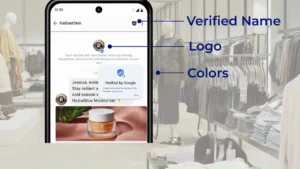
So if you can communicate with a brain, with articulate voice that’s verified, that’s branded, that carries trust for the consumer, then that’s going to be the most effective. So break down that that kind of those those silos and think about, well, how can we make our comms more effective? Not how can we make our outbound calling more effective? Or how can we make our emails more effective?
How can we make our engagement with our consumers more effective?
Paul Lima
Yeah, that client centricity is critical. And then I love how you kind of wrapped it up here with that concept of the brain being AI and the voice being rich communications and summarize that.
I also think when you talk about breaking down silos, the best tool that I know of, given Emerson’s comment about the multidisciplinary nature of what we’re trying to do here with customer experience and the interdepartmental nature of what we’re trying to do here again with customer experience, the best tool that I know is really the design thinking methodology to do that, to break down those silos.
So let’s wrap up here. I wanted to play a quick little game with you in terms of me just throwing a word on the table and then having you kind of respond with maybe a summary word or a word that comes to mind. Emerson, let’s start with you.
And so the first word I’ll put on the table is data.
Management.
Rich communications.
Future.
International business.
Challenging. Emerson Caligarecci.
Emerson Calegaretti
Just a humble guy willing to learn more from you guys.
Paul Lima
Very good. We’ll give you a pass on the more than one word.
Dave Boddington
I love it. Please.
Emerson Calegaretti
Red card for me.
Paul Lima
So Dave, let’s go to you. We’ll do the same words.
Dave Boddington
Data. Siloed.
Paul Lima
Rich communications. Essential. International business.
Dave Boddington
Yeah. I’d agree. Challenging. Challenging.
Paul Lima
And Dave Boddington.
Dave Boddington
Probably in in light of what we’ve been what I brought up earlier, I’d be like a T one point five.
Paul Lima
I love it. It’s desire to go back and watch the film again.
So if you’ve liked what you heard today, I’d ask you to please subscribe, hit the like button.
Agencies are in a pressure cooker right now. And one of the things that we promised to do is talk about how agencies and brand marketers can increase their ability to fight back against eroding margins, the challenges with cost per click, the challenges with return on ad spend by delivering on improved customer experiences using innovative solutions like rich communications, Apple Messaging for Business. We’ve brought in some of the world’s leading experts in this topic from emerging markets and global markets that are undeniably at the forefront of innovation with the adoption of these solutions. And we hope we’ve delivered on our promise today to bring in and help you discuss conversational commerce and how you might be able to use GenAI and AgenTic AI in your operations.
So Emerson, Dave, I can’t thank you enough for the insights and the quips and sound bites here and I just wish you the best. And again, you very much for your willingness to participate on today’s episode.
Emerson Calegaretti
It’s my pleasure. It was a very engaging conversation. I think that we left with great talking points and thought points. If I can partway with something to think about is take a moment and think about how your customer, either future or current, are interacting with you?
Is are the tools or the channels you have right now appropriate for that? Can you take more advantage? Can you improve that over time? It’s a moment to take a break and think about.
Again, Paul, thanks for the invite. It’s an honor. We are not only long time connections, and it’s always a pleasure to be with you and to be talking to you as well. David, it was great meeting you.
I hope that we meet sometime to see Corinthians Aston Villa game.
And thanks for, you know, inviting me again, Paul.
Dave Boddington
Yeah. And and ditto that. Maybe with the the the Club World Cup in a couple of years will be the place to to meet. So I’ve I’ve really enjoyed this this conversation.
I really have. I I hope I’ve shared half as much as I’ve gained from it talking to you guys. So, yeah, I really appreciate it. Thank you so much.
Paul Lima
Equally. Yeah. It’s been a this the whole opportunity to host this podcast has been very enriching for me professionally to be able to have an excuse to sit down, take a deep breath and learn from brilliant minds that are at the forefront of innovation. So again, thanks gentlemen. Thank you.
Dave Boddington
Thank you.